What we buy
- Blue-and-white of every kind — Chinese export and Canton, Kangxi and later, Japanese, Delft, English transferware with age.
- Chinese and Japanese porcelain — famille rose and verte, Imari, Rose Medallion, celadon, garnitures, ginger jars, and the odd fine piece that turns up in a Naples cabinet.
- Continental porcelain and faience — Meissen, KPM, Vienna, Sèvres and the French factories, Italian and French faience, Delft, Rosenthal and Hutschenreuther (a Cape Coral speciality).
- English porcelain and pottery — Worcester, Derby, Coalport, Spode, Wedgwood, Minton, creamware, majolica, Staffordshire figures.
- Glass — cut and pressed glass with age, Waterford and Baccarat, Venetian, Bohemian, decanters, and good lamps.
- Figures, vases, tureens, garnitures — the decorative pieces designers actually buy.
The honest news about dinner services
Most twelve-place china services from the 1950s onward — Lenox, Royal Doulton, Noritake, Wedgwood's everyday patterns — have a small resale market: younger families don't want twelve of anything, and the patterns were made by the tens of thousands. We'll tell you plainly which patterns still sell and which are better donated with a receipt. Older, rarer or hand-painted services are a different matter, and so are the odd pieces — tureens, platters, sauceboats — that are worth more than the plates.
Read the mark, mind the condition
The mark on the base tells us the factory and often the period: crossed swords, a crowned N, an anchor, a pseudo-Chinese reign mark on an export piece, a printed English backstamp with a registration number. Photograph it close, in good light, along with the whole piece. Then check the condition against the light: chips, cracks, hairlines, restoration, and — on gilded and painted pieces — wear to the decoration. Damage matters more on porcelain than on almost anything else we buy, so tell us what you see; we'll tell you what it means.
Bring the cabinet, not the box
For a few pieces, the shop is easiest. For a cabinet or a house of porcelain, we come to you — wrapped porcelain travels badly in a car trunk, and the walk-through lets us see the pieces in context. Naples, Marco Island, Bonita Springs, Estero, Fort Myers and Cape Coral, by appointment. For everything in the house, see estate services.
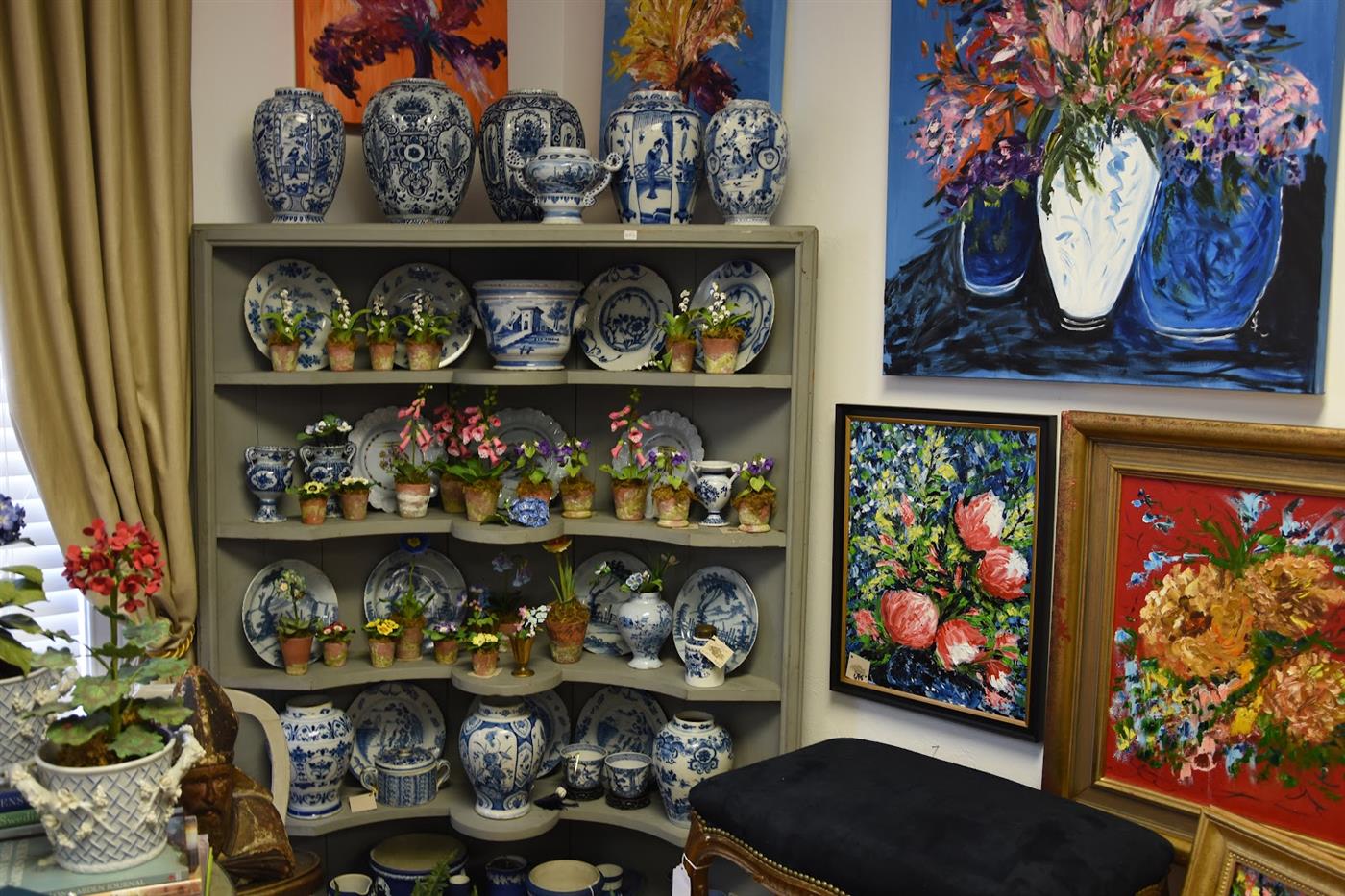 the porcelain corner