What we buy
- Flatware — complete and partial sets, serving pieces and odd spoons, in patterns by Gorham, Tiffany & Co., Reed & Barton, Wallace, Towle, International, Kirk, Stieff, Georg Jensen and the English makers. A near-complete service for twelve in a good pattern is one of the most valuable things a Naples house tends to hold.
- Tea and coffee services — American, English and Continental, with or without the tray.
- Hollowware — trays, bowls, pitchers, compotes, vegetable dishes, candlesticks and candelabra, boxes and cups.
- Early and antique silver — Georgian and Victorian English pieces, American coin silver, Continental 800 and 830 standard, Sheffield plate of the old fused kind.
- Silver-mounted things — dresser sets, cane handles, frames, inkwells and the like, priced for what they are.
Gold, jewelry, coins and bullion — and sterling that's only worth its weight, like damaged pieces or scrap lots — go to our sister shop at the same address, Naples Estate Jewelry, which buys by weight at live metal prices. If the silver chest and the jewelry box are both coming, one trip does it.
Sterling or plate? Read the marks
Turn the piece over. Sterling is almost always marked — STERLING, 925, or .925 on American pieces; a lion passant among the hallmarks on English; 800, 830 or 835 on Continental. Early American pieces may read COIN or PURE COIN, or carry only the maker's name — bring those in; some are the best things we see.
Plated silver is worth a fraction. The tells: EPNS, EP, A1, Silverplate, Quadruple plate, Sheffield on a modern piece, or the maker's name with no standard mark at all. Plated pieces can still be handsome and saleable — we buy good ones — but they are not sterling, and anyone pricing them as if they were is guessing.
Weighted candlesticks, trumpet vases and trophies are sterling on the outside and cement on the inside; their metal value is small, and we price them as objects. Monograms are fine. A little wear is fine. Dents, splits and heavy repairs matter; tell us and we'll tell you how much.
How we price silver
There are three numbers for any piece of sterling: what the metal is worth melted (the floor), what a dealer will pay for it as an object, and what it retails for. Scrap buyers and gold-and-silver storefronts pay the first number. We pay the second, because we sell silver to people who want to use it — and for a good pattern, a fine tea service, or an early piece, the second number is a multiple of the first. We'll show you the arithmetic on both so you can see what you're being offered, and why.
Before you bring it in
- Don't polish it. Tarnish comes off; over-polishing takes the crisp detail — and value — with it.
- Bring the whole set, including the serving pieces in the drawer and the odd spoons in the kitchen. Sets are worth more complete.
- Photograph the marks if you'd like an opinion by email — the underside of a fork handle, the base of a teapot.
- Leave the chest, the fitted boxes and any receipts or pattern names together; they help.
Sell, consign, or auction?
Most silver sells best to us, today. A rare Georgian piece, a Jensen service, a great American maker in original condition, or an important monogram with a story can do better at a specialist auction — and when that's true we'll say so, and place it for you. For a whole house of silver and everything else, see our estate services.
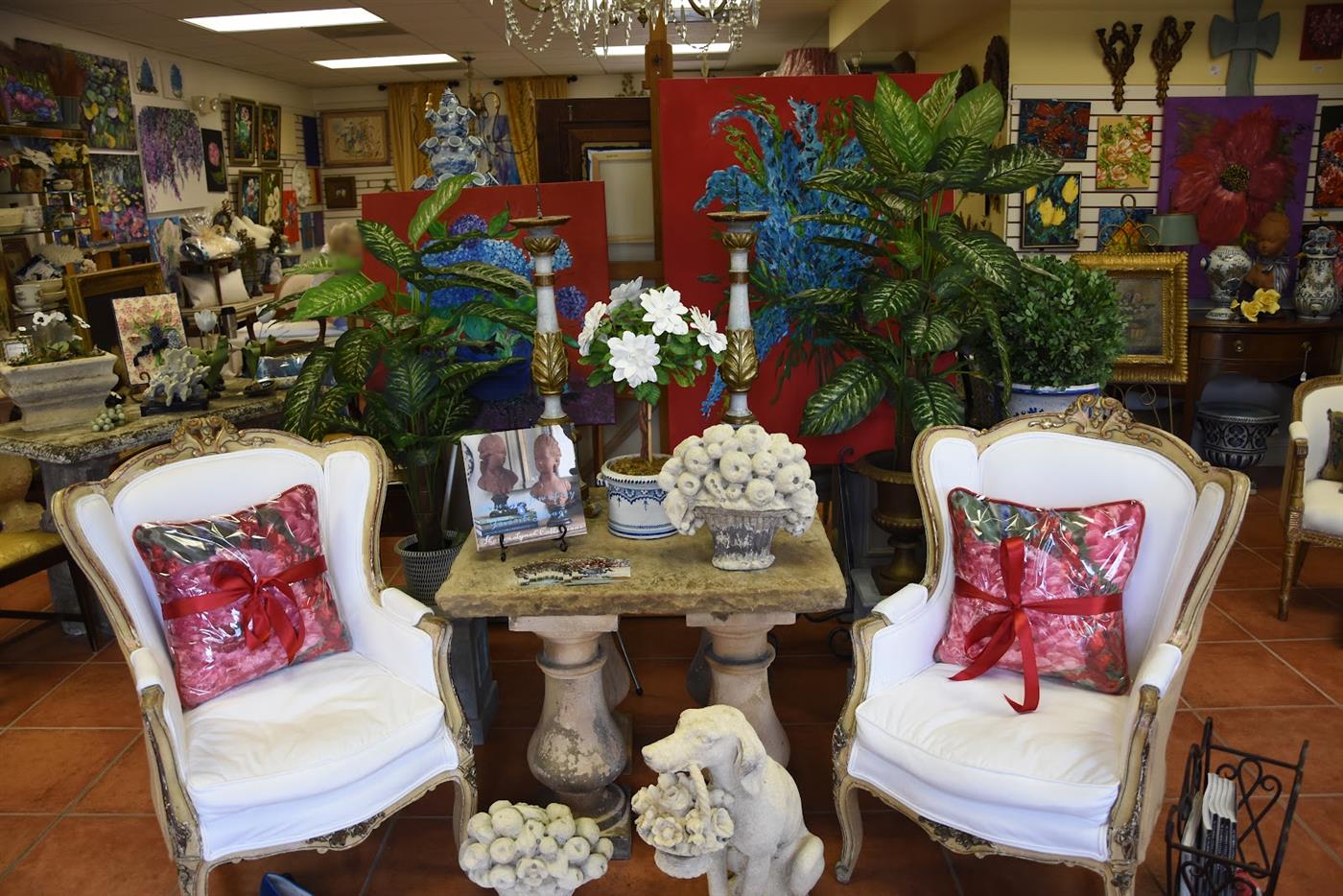 the front room